

The Eloquent Silence of the Canvas
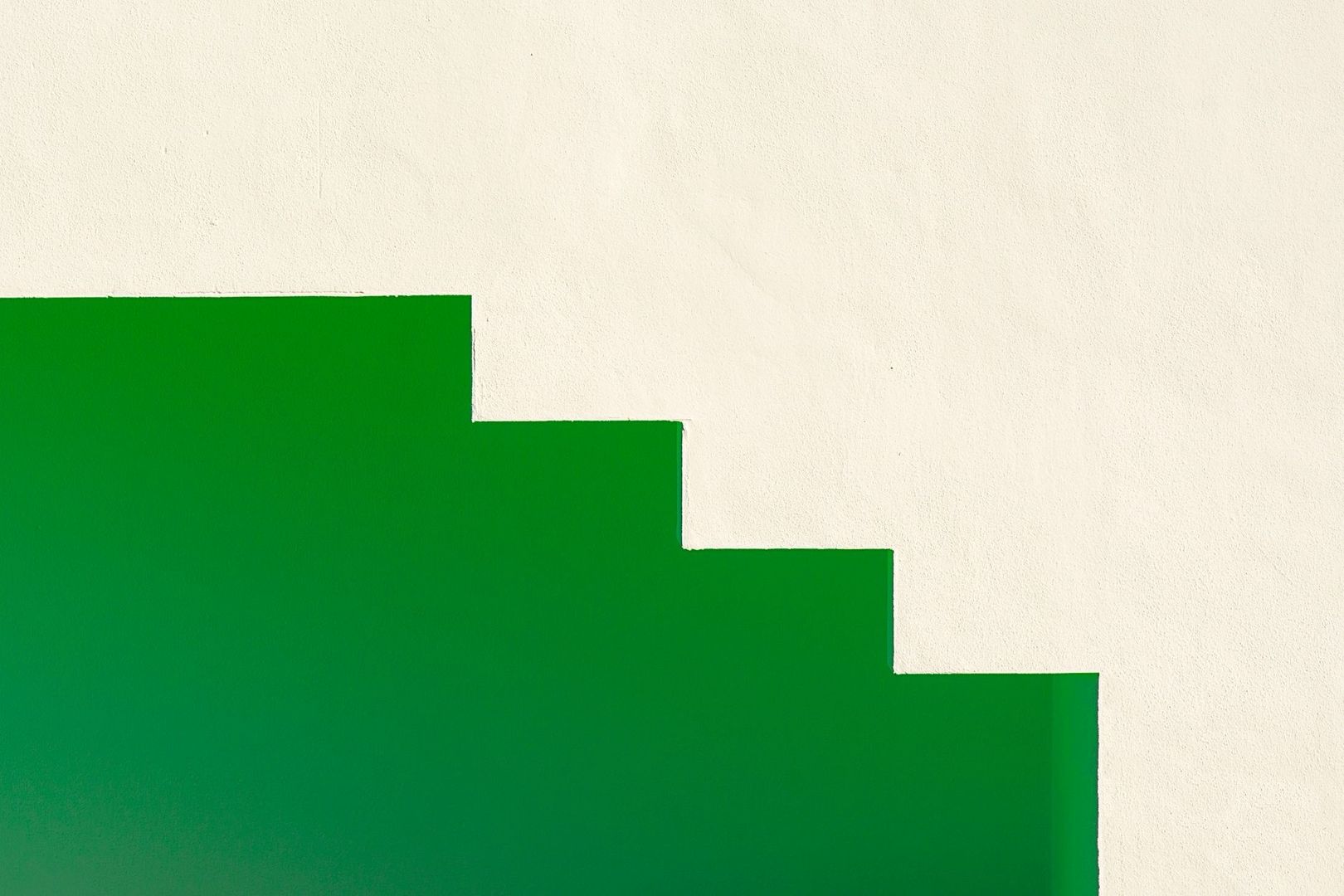
Look closely at a spare composition and the eye may be drawn first not to the painted object, but to the interval around it. A solitary figure suspended against a broad field, a vase encircled by quiet air, or a dark geometric form pressing into an otherwise unoccupied ground can command attention precisely because so little appears to be happening. The paradox is central to visual art: what has not been depicted may determine how everything depicted is seen.
Western traditions have often associated artistic mastery with density, detail, illusionistic depth, and the convincing accumulation of positive forms. Yet visual complexity is only one route to authority. Negative space can establish scale, tempo, mood, and hierarchy with extraordinary precision. It can make a body appear vulnerable, a gesture monumental, or a small mark feel charged with consequence. The purpose of looking at negative space is therefore not to admire absence as a decorative virtue, but to recognize it as an architectural force that organizes perception.
The Philosophy of Ma and the Dynamic Interval
The Japanese concept of Ma offers one of the most subtle ways to understand spatial absence. Ma does not mean a blank void waiting to be filled. It describes an interval, a pause, or an opening in which relationships become perceptible. The distance between two objects, the silence between sounds, and the unpainted ground surrounding a brushstroke may all possess expressive force. An Authoritative Source on the tradition of Ma treats space as something experienced through connection, not as a deficiency in material.
This differs sharply from the Western tendency toward horror vacui, the fear of empty space that has appeared in various decorative and artistic traditions. When every area of a surface is filled, abundance can signify richness, protection, authority, or sacred complexity. But the unfilled field permits another kind of richness. It allows the viewer to register duration, distance, and anticipation. Deeply embedded in traditional aesthetics, the philosophy of Ma illustrates how empty space acts as a living pause between forms.
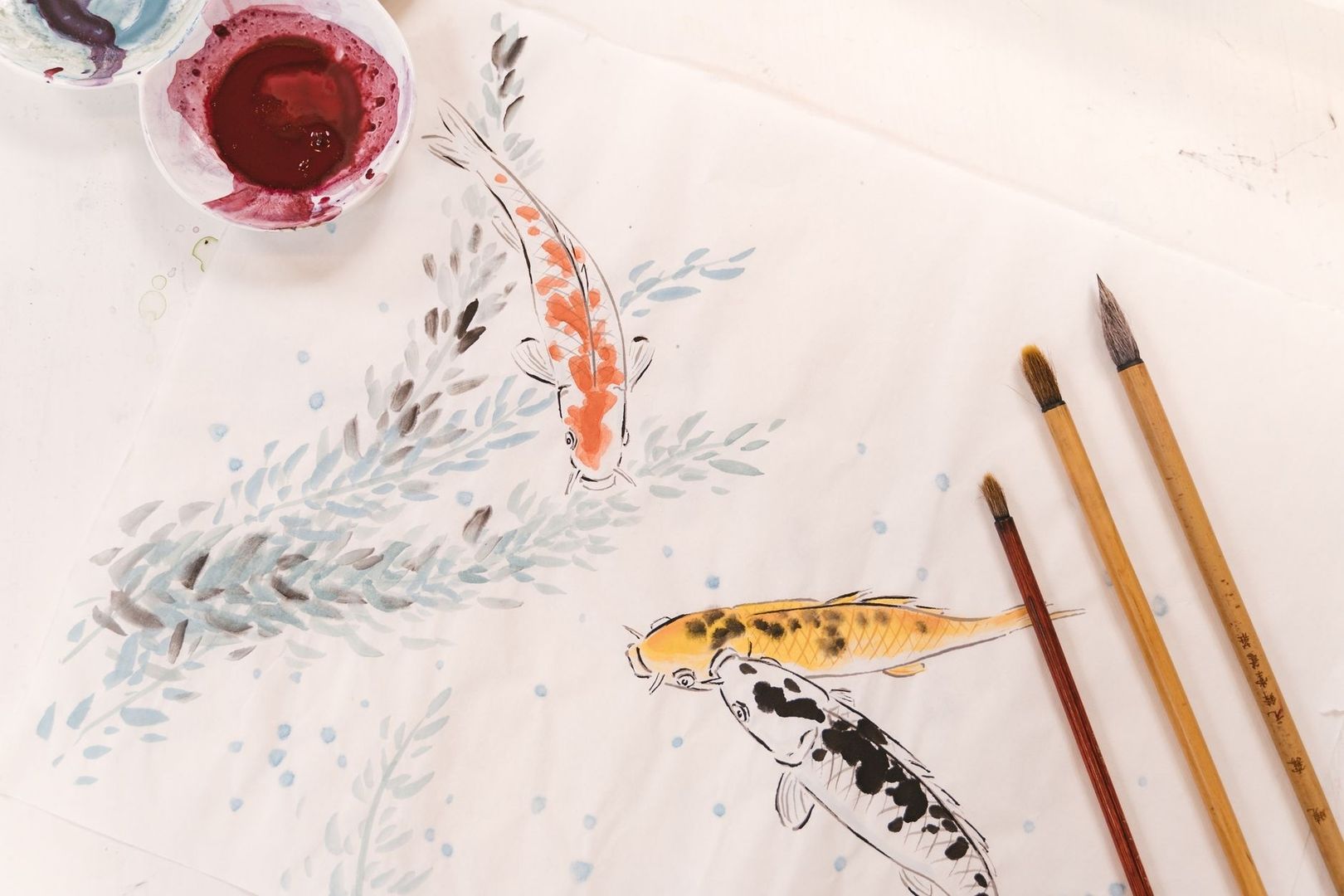
Classical ink wash painting makes this principle especially visible. A few controlled brushstrokes may suggest a mountain, a bird, or a distant shoreline, while the untouched paper becomes mist, atmosphere, water, or unmeasured distance. The painter does not explain every feature. Instead, restraint gives the viewer a role in completing the scene. The white ground carries temporal rhythm: a pause between marks, a breath after movement, and an interval in which an implied landscape continues beyond the edge of representation.
- Interval gives forms room to relate rather than compete.
- Restraint turns suggestion into an active imaginative experience.
- Silence can slow looking and heighten sensitivity to small changes in tone or gesture.
- Context determines whether an unoccupied area feels contemplative, isolated, ceremonial, or unresolved.
Similar principles appear in architecture, ikebana, gardens, calligraphy, and the tea ceremony. A threshold delays entry; an alcove gives a single object heightened dignity; an intentional pause in calligraphy allows the preceding stroke to resonate. In each case, emptiness is measured and relational. It is not simply what remains after the artist has finished, but part of the work”s composition from the beginning.
How Visual Perception Negotiates Figure and Ground
Human vision does not receive a picture as an undifferentiated field. It organizes visual information into figure and ground, distinguishing a form that appears to stand forward from the surrounding field that supports it. This Gestalt principle is not merely a theory for artists. It describes an ongoing negotiation in the viewer”s perception. The brain selects, prioritizes, and groups information, often concentrating on one interpretation at a time. The familiar Rubin vase demonstrates this instability: the same pattern can become either a vase or two opposing profiles, but the two readings do not normally dominate simultaneously.
Artists exploit this perceptual tendency by allowing the ground to remain passive, making it ambiguous, or turning it into an equal partner. Renaissance compositions often used backgrounds to establish recession and support the subject. Modernist and contemporary practices increasingly flatten, crop, camouflage, or pattern the ground, challenging the assumption that objects must remain clearly separated from their surroundings. The result may be visual tension, especially when the supposed background develops its own shape, rhythm, or symbolic weight.
Visual weight determines how this negotiation feels. Dark tones, sharp edges, saturated color, unusual contours, and strong contrast tend to attract the eye. A pale, uncluttered margin may appear light, yet it can amplify a subject by giving its edges greater authority. The following factors help explain how background space becomes active rather than merely supportive.
| Compositional factor | Effect on perception |
|---|---|
| Contrast | Separates figure from ground and increases focal intensity. |
| Scale | Measures the subject against the surrounding field, producing intimacy or monumentality. |
| Edge quality | Sharp contours clarify form, while softened boundaries invite ambiguity. |
| Placement | Off-centre positioning can create movement, imbalance, expectation, or vulnerability. |
| Texture and pattern | Can activate the ground, making it compete with or merge into the figure. |
| Margin and framing | Control visual breathing room and determine how much pressure the surrounding space exerts. |
For the viewer, the important question is not simply whether a background is attractive. Ask instead whether it changes the behavior of the subject. A broad field behind a portrait may isolate the sitter, but it may also suggest social displacement or psychological distance. An apparently empty corner may counterbalance a dense cluster elsewhere in the image. Once figure and ground are understood as interdependent, the composition becomes less a collection of objects than a system of pressures.
The Science of Saccades and Cognitive Rest
Looking is an active physical process. The eyes make fixations, during which gaze pauses relatively briefly on a location, and saccades, which are rapid movements between those points. Contemporary research uses eye trackers to record these pathways, generating fixation plots, heat maps, and areas of interest. The field is surveyed in Eye Tracking and Visual Arts research, which shows how questions about attention and ocular movement have accompanied theories of art from antiquity through modern visual science.
In a saturated composition, numerous high-contrast elements may produce frequent shifts of attention. The eye moves among faces, edges, bright colors, patterns, and directional lines. In a sparse work, fewer elements may create a more deliberate route, though simplicity does not guarantee simplicity of experience. A small mark in a large field can become a powerful attractor, while a low-contrast expanse may encourage the gaze to slow, drift, and reconsider the relation between what is present and what has been withheld.
Negative space often functions as visual punctuation. After a concentrated fixation, an open area provides a perceptual interval before the eye returns to a significant edge or detail. This does not mean that the brain literally stops processing during empty space. Rather, the composition reduces competing signals and permits attention to reorganize. Contemporary museum research using mobile eye tracking also demonstrates the value of studying viewers in authentic environments, where movement, labels, architecture, and neighboring works influence how art is seen.
- Use the first glance to notice where attention lands without conscious direction.
- Observe whether the eye travels through the open field or avoids it.
- Look for edges where empty space meets form, since these boundaries often carry the greatest tension.
- Notice whether the unoccupied area produces calm, suspense, loneliness, or anticipation.
Emotional tension arises when an empty zone withholds easy resolution. A figure facing into open space may imply departure, expectation, or an unseen object. A subject pressed against an edge can feel constrained, as though the surrounding field has become a psychological force. Conversely, generous space around a quiet form may create contemplation rather than isolation. The distinction depends on proportion, direction, contrast, and context. Empty space is not inherently peaceful; it becomes expressive through its relation to the forms that activate it.
Evaluating Spatial Tension as a Discerning Collector
For collectors, negative space offers a practical vocabulary for distinguishing deliberate restraint from underdeveloped composition. A spare work should not be judged by the amount of material it contains. The more useful question is whether every interval appears to participate in the work”s logic. Look closely at the distance between a subject and the frame, the balance between dense and quiet passages, and the direction in which a figure seems to move or look.
Scale is especially important. A small work with substantial margins can create intimacy, asking the viewer to approach and attend closely. A large work with a lone mark may produce monumentality, vulnerability, or a sense of the sublime. Framing can either preserve this tension or weaken it. A heavy frame may compress a delicate field; a narrow border may make the composition feel more exposed. In a gallery, surrounding works also matter. A quiet painting placed beside a visually crowded one may gain intensity, while a room of uniformly sparse works may reduce the contrast that makes each interval legible.
- Begin with the perimeter. Trace the relationship between the subject and each edge of the support. Unequal margins may create direction, suspension, or instability.
- Identify the visual weights. Locate the darkest, sharpest, brightest, or most distinctive areas, then ask how the open spaces counterbalance them.
- Test the silence. Spend time with the apparently empty zones. Do they guide the eye, hold atmosphere, or merely remain unused?
- Read the emotional consequence. Consider whether the space suggests calm, isolation, tension, expectancy, or release.
- View the work at different distances. From afar, assess its overall force; up close, examine whether the restraint is supported by meaningful material decisions.
- Consider the intended setting. Imagine the work in a domestic room, a dense salon-style hanging, or a quiet gallery. Its spatial power may change substantially.
Photography provides a useful parallel. A subject placed before an uncluttered background can direct attention toward a gesture, texture, or expression, while a subject moving into open space may acquire narrative momentum. The same principle applies to painting, sculpture, installation, and design, although three-dimensional works add the viewer”s physical movement to the equation. In sculpture, the void between limbs or inside a structure may be as materially important as the object itself. In installation art, circulation paths turn negative space into something experienced by the body.
Before acquiring a work, consider whether its emptiness will remain legible in the proposed environment. Strong architectural lines, patterned wallpaper, or crowded furniture may interrupt a composition that depends on quiet margins. Conversely, a work with active ground and assertive spatial tension may hold its own in a more complex interior. The collector”s task is not to seek emptiness for its own sake, but to recognize when the interval has been shaped with enough intelligence to continue rewarding attention.
Cultivating an Eye for What Remains Unspoken
Negative space emerges as active form from two complementary directions. Philosophical traditions such as Ma describe the interval as a site of relation, breath, and resonance. Cognitive science shows that viewers move through images by fixing, shifting, grouping, and resting their attention. Together, these perspectives challenge the idea that an unpainted area is simply a lack. The field around a form can direct the gaze, modulate emotion, establish scale, and give a work its characteristic tempo.
The next time a spare composition appears before you, resist the urge to ask what is missing too quickly. Ask what the silence is doing. Observe the pressure of the frame, the distance between forms, and the way your attention changes when no new detail competes for it. Negative space is present not only in paintings and photographs, but also in architecture, typography, gardens, urban design, and emerging art practices that use interruption as material. To see those intervals is to develop a more precise visual vocabulary, one capable of recognizing mastery where the most consequential gesture may be the decision to leave something open.