

The Color That Once Cost More Than Gold
Look closely at a Renaissance altarpiece and notice where blue appears. The mantle of the Virgin, the robe of Christ, or a narrow field of heaven may carry an unusual depth, neither merely dark nor simply bright. That blue is often natural ultramarine, a pigment made from lapis lazuli mined chiefly in the mountains of Afghanistan. Its remote origin, difficult refinement, and extraordinary visual authority gave it a mystical cachet that exceeded ordinary material value. In the Renaissance, genuine ultramarine could cost more than gold, making every visible passage a declaration of devotion, patronage, and financial power.
Blue was therefore never just another color on the painter”s shelf. Guild regulations, workshop practices, and commissioning contracts often restricted its use, while patrons specified that the most expensive pigment should be reserved for the holiest figures. To understand the history of ultramarine is to see how material scarcity shaped artistic meaning. When synthetic ultramarine entered the market in the nineteenth century, it did more than reduce a price. It loosened an entire system of visual hierarchy, giving painters the means to observe the world rather than merely repeat inherited formulas.
Lapis Lazuli and the Sacred Economics of the Old Masters
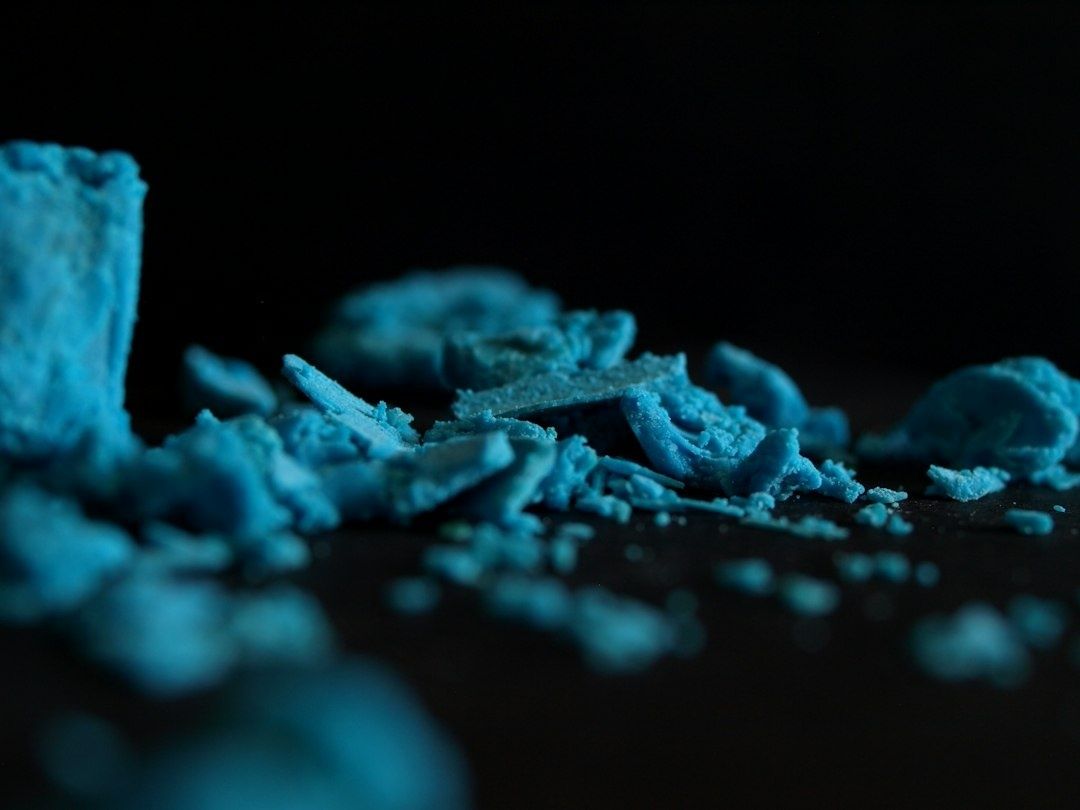
Natural ultramarine began as an unpromising stone. Lapis lazuli was transported over long distances, then crushed, washed, ground, and repeatedly separated from unwanted minerals. The finest blue particles were extracted through a laborious process involving waxes, resins, and kneading, with the pigment gradually released from the heavier impurities. A small amount of brilliant blue could require a large quantity of raw stone and considerable specialist labor. The result was a pigment with a distinctive clarity, permanence, and cool intensity that cheaper substitutes struggled to match.
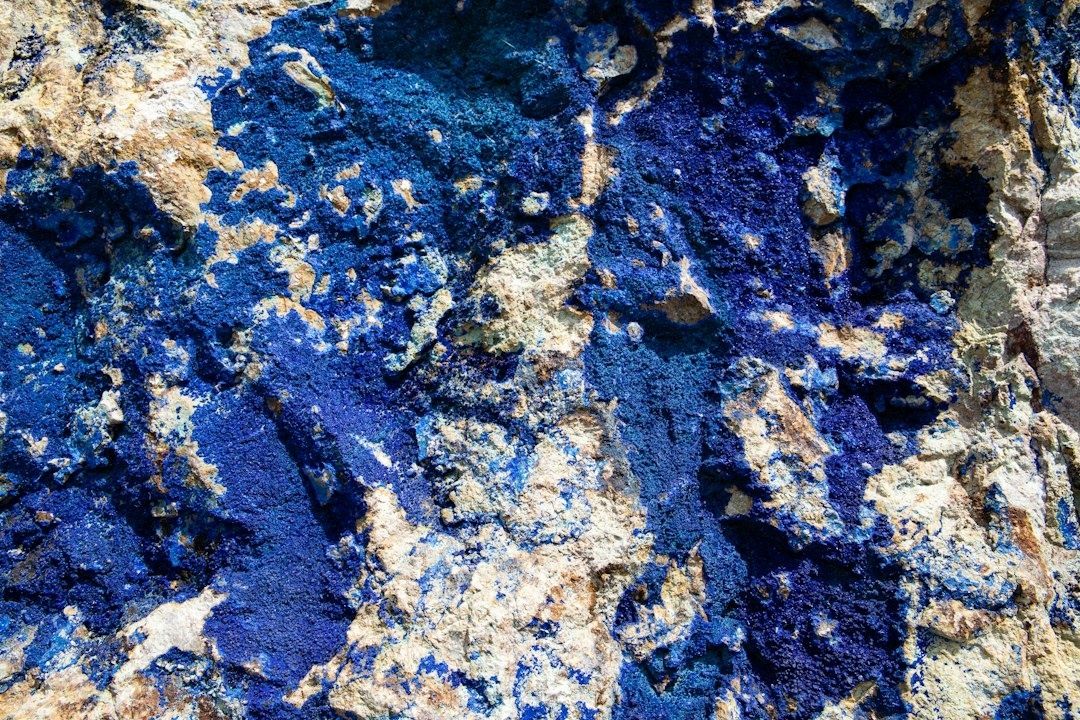
That expense entered the structure of the studio. In early modern Europe, painters did not necessarily purchase materials freely and apply them according to personal preference. Contracts could specify the quality of blue, the areas in which it should appear, and sometimes the amount to be supplied by the patron. The Virgin”s mantle was an especially important destination because blue had acquired associations with royalty, heaven, purity, and sacred protection. A painter might use azurite, smalt, or a less costly mixture beneath and around the figure, while reserving true ultramarine for the most visible and symbolically charged passages. When exploring art history and the transformative craft of pigment production, one uncovers how early workshops operated, with technique inseparable from economics and religious expectation.
| Characteristic | Natural ultramarine | Synthetic ultramarine |
|---|---|---|
| Primary origin | Lapis lazuli from Afghanistan and related Central Asian sources | Manufactured from mineral and industrial ingredients |
| Visual character | Deep, clear blue with individual variation caused by the stone | Consistent blue, often darker or less azure than the finest natural material |
| Cost | Exceptionally high because of mining, transport, and extraction | Affordable enough for ordinary studio use |
| Working qualities | Effective in oil and tempera, with a prestigious but costly presence | Suitable for oil and watercolor, durable and non-toxic according to pigment histories |
| Cultural meaning | Linked to sacred figures, luxury, and patronal prestige | Linked to access, experimentation, and modern color freedom |
The contrast between the two formulations should not be reduced to a simple story of authentic beauty versus industrial imitation. Natural ultramarine possesses a geological individuality, and its particles can produce subtle variations that reward close examination. Synthetic ultramarine, however, offered reliable strength, a predictable supply, and a price compatible with repeated trials. It transformed blue from a ceremonial resource into a practical instrument of looking. The significance of that change becomes especially clear when considering the painters who worked outside the controlled environment of the academic studio.
Guimet and the Industrial Quest for Democratic Blue
The search for an affordable substitute intensified as European chemistry began to treat pigments as objects of systematic investigation. In 1824, the French Société d”Encouragement pour l”Industrie Nationale offered a prize of 6,000 francs for a method capable of producing artificial ultramarine. The sum signaled the importance of the problem. This was not merely an artists” request for a cheaper tube color. It was an industrial challenge involving chemistry, manufacturing, trade, and the cultural status of painting.
Jean-Baptiste Guimet achieved the decisive breakthrough in 1828, following a process he had developed secretly in 1826. His formulation used china clay, soda ash, sulfur, and charcoal, heated and treated until a stable blue compound emerged. Christian Gottlob Gmelin independently developed and published another method soon afterward. By about 1830, synthetic ultramarine was being manufactured in France and Germany. The consequences were immediate and profound:
- Blue became available at a fraction of the cost of natural lapis-derived pigment.
- Painters could use it broadly in skies, water, foliage, architecture, and shadow.
- Workshops were no longer required to reserve the strongest blue exclusively for sacred figures.
- Artists could mix, revise, and experiment without treating every brushstroke as an expensive gamble.
Guimet”s achievement altered the relationship between chemistry and artistic ambition. The pigment was non-toxic and durable, and it performed effectively in both oil and watercolor. Although French synthetic ultramarine was often darker and less azure than the finest natural variety, its consistency was itself a creative advantage. A painter could return to the same color repeatedly, develop a personal palette, and build a visual language around blue without depending on the uncertain supply of an imported mineral.
Shattering the Bitumen Mold into the Open Air
Early nineteenth-century academic painting often depended on a restricted tonal logic. Warm asphaltum, bitumen, umbers, and muddy brown mixtures were used to establish depth, soften transitions, and model shadow. This approach could produce impressive solidity, but it also encouraged a studio convention in which dark areas were treated as fundamentally brown or black. The landscape, once filtered through that system, became orderly and weighty. Atmosphere was subordinated to contour, and local color was often disciplined into a narrow range of earth tones.
Affordable ultramarine challenged that habit at the level of observation. Once blue could be used without anxiety, painters began to notice that outdoor shadows do not behave like holes cut into a scene. They are transparent, reflective, and often infused with the blue of the sky. A white wall in sunlight may cast a cool violet shadow. Snow may contain blue, lavender, and green. Water may reflect sky, cloud, architecture, and vegetation at once. The discovery was not that nature had suddenly become colorful, but that older studio conventions had concealed color relationships already present in the world.
The development of portable materials reinforced this shift. Collapsible paint tubes, introduced in the nineteenth century, made prepared colors easier to carry and reduced the need for painters to grind pigments in the studio before travelling. Together, portable paint and affordable synthetic blue helped make sustained work outdoors more practical. As the WebExhibits pigment archives observe, synthetic pigments radically broadened the outdoor painter”s palette. The important point is not that a single invention created plein air painting, but that material innovations made a new kind of sustained visual attention possible.
Impressionism and the Liberation of Optical Atmosphere
Monet, Renoir, and Pissarro did not simply add more blue to traditional compositions. They used blue to question the assumptions by which a painted scene had previously been organized. In their landscapes, color could describe temperature, reflected light, distance, and movement simultaneously. A blue passage might serve as water, shadow, haze, or an optical bridge between separate forms. Ultramarine became especially valuable because its intensity could survive mixtures while still shifting toward violet, green, or gray according to its neighbors.
Look closely at an Impressionist surface and the eye often finds no single, authoritative shadow. Instead, it encounters touches of related colors that fuse at viewing distance. This method replaced the academic search for a stable local tone with attention to changing perception. A tree trunk was not always brown, a cloud was not always white, and a shadow was not necessarily black. Color became an event, dependent on the angle of light, the hour of day, the surrounding field, and the movement of the observer.
- Observe the light before naming the object. Impressionist color begins with the conditions of seeing, not with a fixed label such as “grass” or “stone.”
- Read neighboring colors together. A blue shadow can make an adjacent orange wall appear warmer, while a violet note can deepen the green of foliage.
- Notice the dissolving contour. Synthetic blue helped painters replace hard outlines with interlocking touches that suggest atmosphere and vibration.
- Step back from the canvas. Separate brushstrokes may merge into water, mist, or sky when viewed at the distance for which the composition was intended.
This dissolution of structural contour was one of the most radical consequences of abundant pigment. The painting no longer had to describe the world through firm edges and carefully ranked tonal masses. It could register fleeting conditions. Ultramarine helped dissolve the boundary between object and atmosphere, not by erasing form entirely, but by showing that form is perceived through light. The blue revolution was therefore optical as much as industrial.
Seeing the Modern World Through Unbound Color
Synthetic ultramarine stands as a particularly eloquent example of the partnership between chemistry and creative vision. Guimet did not invent Impressionism, and no pigment alone can explain a movement as complex as modern landscape painting. Yet the availability of dependable blue changed what artists could test, repeat, and observe. It weakened the authority of inherited studio formulas and made room for a more immediate encounter with the visible world.
For collectors and art lovers, the history of blue offers a practical way to look more closely. Notice whether a blue passage appears granular, transparent, chalky, or intensely saturated. Ask how it behaves beside ochre, vermilion, green, or violet. In an older devotional painting, blue may announce sacred importance and patronal wealth. In a nineteenth-century landscape, it may instead carry the atmosphere of a particular hour, allowing distant hills, water, and shadow to vibrate within the same visual field. Context shapes interpretation. The lasting legacy of synthetic ultramarine is not simply that more people could afford blue, but that painters gained greater freedom to show light, space, and sky as living, changing phenomena.