

Beyond Surface Beauty in the Dutch Golden Age
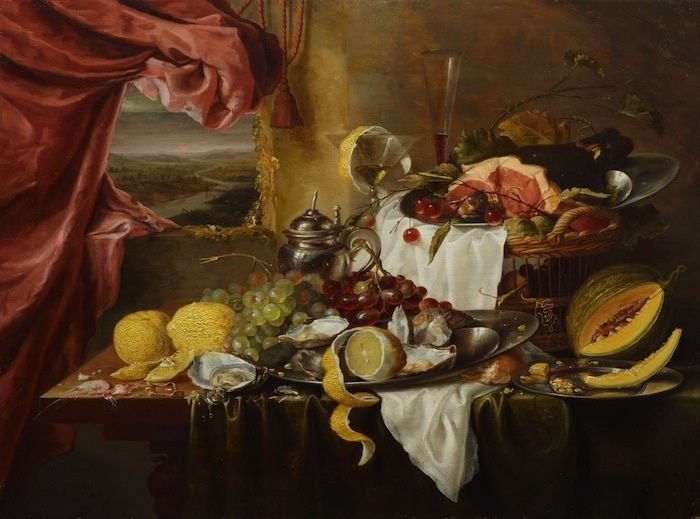
The Dutch Golden Age produced a culture in which commercial success, scientific curiosity, and visual refinement flourished together. Merchant wealth filled urban homes with imported porcelain, silver vessels, citrus fruit, maps, books, and textiles, while painters transformed such objects into carefully staged performances of light and material. For a modern viewer exploring Dutch still life painting, the first impression is often one of abundance: a peeled lemon glistens beside a silver dish, grapes appear almost translucent, and a glass seems ready to ring against the tabletop.
Look more closely, however, and the apparent celebration of possession becomes something more searching. Seventeenth-century still lifes frequently operate as moral puzzles, balancing sensory pleasure against the Calvinist awareness that prosperity is temporary and human beings remain accountable for how they use it. This is the world of vanitas, a visual language in which everyday objects become intellectual ciphers. Their meanings are not fixed like labels, but they invite a disciplined sequence of looking: observe the object, notice its condition and placement, then ask what kind of life, value, or disappearance it implies.
The Anatomy of Vanitas and Calvinist Anxiety
The Dutch Republic was a remarkable setting for this visual tension. Its maritime trade connected Amsterdam to distant markets, bringing spices, shells, sugar, tobacco, and luxury goods into an increasingly prosperous urban society. Yet this commercial culture existed alongside a Protestant emphasis on restraint, self-examination, and the fleeting nature of worldly achievement. Wealth could be interpreted as evidence of diligence and divine favor, but it could also expose its possessor to pride, vanity, and moral danger. The still life became an ideal arena in which these contradictions could be held in suspension.
The term vanitas derives from the Latin phrase in Ecclesiastes, traditionally translated as “vanity of vanities,” a warning that earthly pursuits are fleeting. In visual form, that warning might appear as a skull, a dying flower, a guttering candle, or fruit beginning to soften. The object is never merely an object. A watch measures more than minutes, and a sumptuous meal suggests more than appetite. As discussions of seventeenth-century Dutch painting, including those gathered in scholarship on the Age of Rembrandt, demonstrate, moral, social, technical, and intellectual concerns often overlap in Dutch art.

Private collectors could therefore commission or acquire still lifes as spiritual mirrors. Such pictures allowed viewers to enjoy the painter”s extraordinary skill while confronting the limits of ownership. A costly goblet may advertise refinement, but if it is tipped toward the edge of the table, its precariousness becomes part of the subject. A book may testify to learning, yet its open pages also imply that knowledge cannot postpone death. During the seventeenth century, still life developed from the simple depiction of domestic things into a sophisticated form of emblematic thought, one in which the pleasure of looking was itself part of the moral test.
The Glistening Lemon and the Illusion of Luxury
Among the most eloquent objects in Dutch still life is the lemon. Research presented by the University of Montana records lemons in 51 percent of sampled Netherlandish paintings made between 1500 and 1650, compared with 16 percent of Italian works from the same period. The frequency is striking because citrus plants required specialized hothouses to survive the Netherlandish climate. A lemon was therefore not simply a casual piece of household produce. Its presence could signal international commerce, horticultural expertise, expense, and access to an unusually broad world of goods.
The peeled lemon also gave painters an exceptional technical challenge. Its rind curls across the table in a long spiral, catching light on its glossy exterior while exposing the pale pith beneath. The artist must distinguish waxy skin, fibrous membrane, moist flesh, and the reflective surface of juice, often within a single narrow strip of paint. This is why the lemon functions simultaneously as object, subject, and emblem. It demonstrates artistic mastery even as it questions the seductive surfaces that mastery reproduces. Further context appears in the study Appealing Unpeeled, which examines the lemon”s material, medical, commercial, and symbolic associations.
Its symbolism depends on paradox. The lemon is brilliantly colored and visually tantalizing, yet its inner flesh is intensely sour and, in some contexts, barely pleasurable to eat. The curled rind suggests consumption already in progress, but it may also evoke exposure, vulnerability, and decay. Its bitterness can temper the promise of luxury, reminding the viewer that abundance is not identical with satisfaction. In this way, the lemon quietly asks whether material allure has been mistaken for lasting value.
- Bright color can suggest vitality, wealth, and visual seduction.
- Peeled rind reveals the labor and performance behind apparent natural abundance.
- Sour flesh and pith introduce bitterness into an otherwise luxurious display.
- Imported origins point toward Dutch commercial power and global exchange.
Visual Guide to Common Vanitas Symbols
Vanitas imagery is most persuasive when several objects form a conversation rather than when one symbol dictates a single interpretation. A flower may indicate fragility, but its meaning changes when placed beside a watch, a book, or a costly vessel. Likewise, a meal can signal hospitality and prosperity while also displaying the perishability of food. The following motifs are best approached as flexible clues. Context, condition, scale, and neighboring objects shape their force.
| Motif | What the eye notices | Common vanitas implication |
|---|---|---|
| Tipped roemer goblet | Transparent glass, spill, unstable balance | Sudden mortality, pleasure interrupted, fragile status |
| Snuffed tallow candle | Smoke, blackened wick, extinguished flame | Life abruptly ended and time beyond human control |
| Pocket watch or hourglass | Measured intervals and visible mechanism | The relentless passage of earthly time |
| Rotting fruit | Bruised skin, discoloration, collapse | Decay beneath beauty and the limits of abundance |
| Skull | Bare bone, empty sockets, frontal stillness | Physical mortality and the equality of death |
| Musical instrument | Strings, polished wood, implied sound | Ephemeral pleasure and the disappearance of experience |
| Open book | Text, pages, signs of learning | Human intellect contrasted with bodily decay |
A Collector Perspective on Reading Spatial Composition
Symbolism does not reside only in the objects themselves. It also emerges through arrangement. Dutch painters often organize a still life along a diagonal, moving the eye from a prominent vessel or fruit at the foreground toward smaller objects receding into shadow. A table edge may run close to the picture plane, making the arrangement feel almost within reach. Yet that intimacy is unstable. A knife projects outward, a dish overhangs the edge, or a goblet leans at an angle that seems to threaten the entire composition.
Chiaroscuro intensifies this narrative. Light may strike the lemon, silver, and glass with theatrical clarity, while the background dissolves into darkness. The viewer is first attracted by surface pleasure, then guided toward the less comfortable details: a bruised grape, a dying flower, a watch, or a candle reduced to smoke. In a successful vanitas, the composition does not separate luxury from mortality. It makes them visually dependent on one another. The brilliance of the silver makes the darkness deeper, and the darkness gives the brilliance its urgency.
For contemporary viewers and collectors, symbolic density should be considered alongside condition and provenance. A painting may contain recognizable motifs without being a fully developed vanitas, while a restrained composition may carry profound meaning through placement, gesture, and light. Technical examination can reveal later overpaint, altered contours, or losses in translucent passages, especially in dark backgrounds and reflective objects. Historical documentation, exhibition records, and a clear chain of ownership help establish whether an attribution and interpretation are secure.
- Begin with inventory. Identify every object before assigning meaning, including partially hidden items, reflections, spills, and signs of deterioration.
- Trace the gaze. Follow diagonals, light paths, projecting edges, and areas of contrast to see how the painter controls attention.
- Compare condition with symbolism. Ask whether decay is painted intentionally or results from later damage, aging, or restoration.
- Investigate context. Consider the artist, date, city, collector, known workshop practice, and related compositions.
- Test the interpretation. A convincing reading should explain the relationship among several details, not rely on one familiar emblem.
Sharpening Your Eye for Hidden Truths in Museum Galleries
Dutch Golden Age still life is best understood as a dialectic between visual pleasure and existential gravity. These paintings invite admiration for the painter”s control of texture, reflection, color, and spatial illusion, yet they also ask what such pleasures mean when time is passing beneath them. The silver dish may be valuable, the fruit abundant, and the book eloquent, but none is secure. Their beauty is sharpened by the knowledge that it cannot last.
In a museum gallery, resist the temptation to read these works as inventories of possessions alone. Look for the moment when luxury becomes precarious, when a peeled rind becomes a meditation on exposure, or when an open book falls silent beside a skull. The vanitas remains compelling because modern material culture has not escaped its central dilemma. Contemporary life still surrounds itself with objects that promise identity, comfort, and distinction. Dutch still lifes continue to remind attentive viewers that the deepest meaning of possession may lie not in what it displays, but in what it cannot preserve.