

The Anatomy of the Plinth in Modern Public Spaces
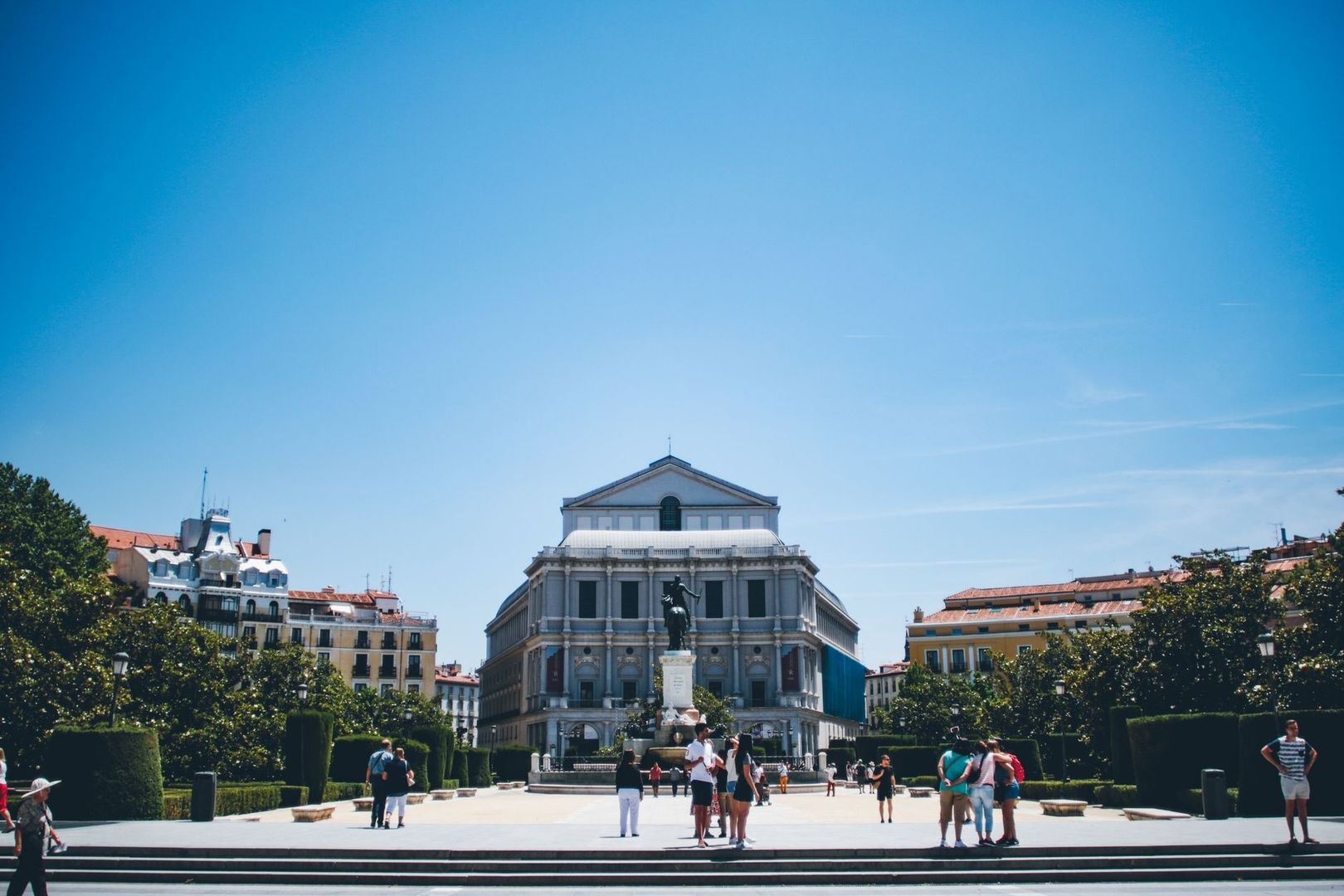
Look closely at a traditional civic monument and the first thing to notice is not always the figure itself. It is the architecture of separation. A raised plinth lifts the represented person above the passer-by, while the surrounding steps establish a ceremonial distance between the body in bronze and the bodies moving through the square. The arrangement creates a physical hierarchy: the viewer looks upward, the subject appears to command the horizon, and the city becomes a stage for authority. In this setting, the statue is not simply an object in public space. It is an instruction about whom to honour, how to remember, and where power belongs.
Bronze and granite became the characteristic materials of this language because they seemed to promise endurance. Bronze could preserve the gestures of a military leader, statesman, monarch, or allegorical figure with considerable detail, while granite supplied the weight and geological permanence of the base. Their durability made them useful instruments of institutional memory. A monument that appeared capable of outlasting generations could make a political interpretation feel natural, even inevitable. Yet permanence is never entirely neutral. It reflects the choices of those who commissioned, funded, approved, and positioned the work.
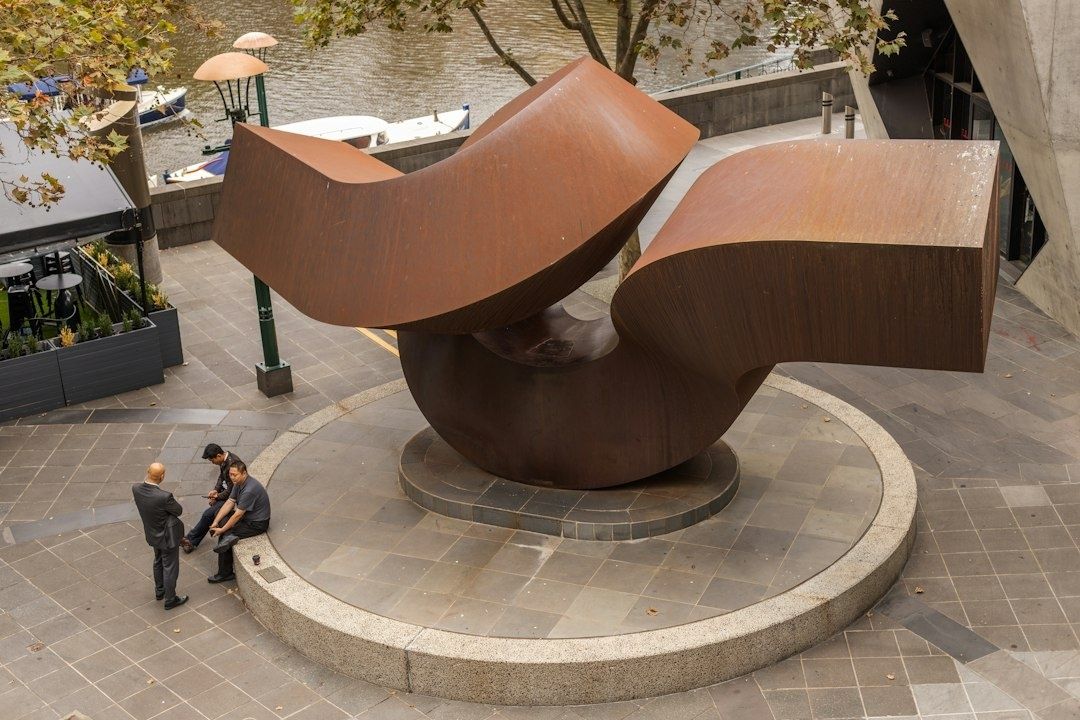
Today, the curatorial perspective is changing. Public sculpture is increasingly understood not as a finished declaration demanding passive reverence, but as an active site of interpretation. A statue may be moved, accompanied by new text, placed in dialogue with another work, or commissioned for a limited period. The question is no longer only what a monument represents, but how it behaves among living citizens. Through these artistic and civic interventions, collective memory becomes something negotiated in public rather than inherited without examination.
The Legacy of Institutional Monumentalism
The modern civic monument grew from a long conversation between classical ideals and national administration. In the nineteenth century, governments and municipalities borrowed the visual vocabulary of antiquity to give modern political projects an appearance of continuity. Columns, axial avenues, heroic figures, allegories of justice, and carefully framed vistas suggested that the state was not merely an administrative arrangement but the custodian of a grand historical order. Monumental design translated political legitimacy into stone, bronze, proportion, and procession.
The City Beautiful movement intensified this ambition. Shaped in part by the visual impact of the 1893 World”s Columbian Exposition, the movement promoted ordered streets, monumental public buildings, parks, fountains, and sculptural ensembles as instruments of civic improvement. Beauty was associated with discipline, social progress, and institutional prestige. In Washington, D.C., these ideals influenced the McMillan Plan and the development of the National Mall. The History of the Commission of Fine Arts shows how the federal advisory body, established by Congress in 1910, helped review and shape statues, fountains, monuments, federal buildings, parks, memorials, and other national symbols.
Such commissions did more than assess craftsmanship. They established a framework in which permanence itself could function as a form of historical legitimacy. A work selected through an official process, executed in durable material, and placed within an ordered civic landscape gained an authority that exceeded its physical scale. Contemporary curatorial practice tends to distribute that authority more widely, asking communities to participate in interpretation and sometimes in the decision to retain, relocate, or transform a monument.
| Aspect | Nineteenth-century monumentalism | Contemporary curatorial approach |
|---|---|---|
| Primary purpose | To embody national, imperial, or civic ideals | To invite reflection, dialogue, and plural memory |
| Typical material language | Bronze, granite, marble, and formal architectural settings | Permanent and temporary materials, including experimental forms |
| Audience relationship | Viewer as respectful observer | Citizen as participant and interpreter |
| Time frame | Designed to appear fixed and enduring | May be permanent, rotating, contextualised, or removable |
| Institutional process | Centralised commissions and expert approval | Broader consultation involving artists, curators, residents, and civic bodies |
Re-evaluating the Pedestal in Contemporary Civic Spaces
The pedestal is now being reconsidered as both a design element and a political device. Legislative change has often followed public debate about whether a monument”s original message remains compatible with the values of the community that lives around it. These debates are rarely limited to aesthetic preference. They involve questions of historical responsibility, racial violence, public ownership, legal authority, and the distinction between preserving an object and preserving its original position of honour.
Virginia provides a useful example of how governance can alter the range of civic choices. Legal reforms associated with Virginia HB1537 illustrate the importance of state assemblies in determining whether local authorities have a mechanism to contextualise, relocate, or remove contested monuments. The linked legislative record should be consulted directly for the official bill information, since legal powers and procedures depend on the precise text and the applicable rules at the time.
What stands out in these developments is the movement away from state-decreed permanence toward democratic negotiation. A city may choose to retain a statue but add interpretive material, move it from a ceremonial square to a museum, place it alongside counter-monuments, or remove it from a position of public honour. None of these options is merely technical. Each changes the relationship between the object and its audience.
- Retention with context can preserve material evidence while clarifying who commissioned the work, whom it excludes, and how its meaning has changed.
- Relocation can distinguish historical preservation from continued civic veneration.
- Removal can recognise that a public square is not a neutral archive but a landscape of symbolic belonging.
- Commissioning new work can broaden the visual record without pretending that earlier monuments never existed.
The Rise of Ephemeral and Rotating Commissions
Temporary commissions introduce a different rhythm into civic space. London”s Fourth Plinth in Trafalgar Square is one of the clearest examples of a prominent platform being used for changing artistic propositions rather than a single permanent hero. The curatorial model accepts that public meaning can be refreshed. Each commission occupies the same architectural position but alters the conversation around it, allowing contemporary artists to address citizenship, identity, humour, vulnerability, migration, labour, and everyday experience.
This approach also shifts attention from the mythological hero to the contemporary citizen. Tschabalala Self”s Lady in Blue, described in the supplied material as the latest Fourth Plinth commission and available to view until summer 2028, presents a powerful figurative presence in motion. The woman”s purposeful stride suggests an urban subject with somewhere to be, rather than a ruler waiting to be admired. Her scale and placement grant monumental visibility to an experience that is recognisable precisely because it is ordinary: moving through a crowded city with concentration, speed, and self-possession.
The work”s impact depends on the relationship between its visual language and its setting. A passer-by need not enter a gallery, understand a specialised art-historical reference, or arrive with a prepared interpretation. The figure meets people at the level of the street, where reading is interrupted by traffic, conversation, weather, and personal routine. Temporary sculpture therefore makes public dialogue less ceremonial and more conversational. It can produce disagreement, amusement, identification, or curiosity, and its eventual departure becomes part of the work”s civic life.
- Scale asks whether the work dominates, accompanies, or mirrors the people around it.
- Pose and gesture reveal whether the represented body commands attention, invites empathy, or resists easy interpretation.
- Duration changes the expectations placed upon the work, since a temporary commission can remain exploratory rather than definitive.
- Location determines which communities encounter the piece and what existing histories it enters.
Developing a Curatorial Vocabulary for Democratic Art
Democratic public art requires more than a welcoming intention. It needs a vocabulary capable of connecting visual experience with civic consequence. Begin with what can be seen: the material, surface, scale, colour, pose, orientation, and relation to the surrounding architecture. Then move toward interpretation. What kind of person or community is made visible? Who appears to be addressed, and who may feel overlooked? Finally, consider context. Who commissioned the work, who approved it, who maintains it, and what histories accompany its site?
- Observe the physical encounter. Notice whether the work is elevated, approachable, enclosed, obstructed, or designed to be viewed from a particular route. The body of the viewer is part of the composition.
- Identify the represented subject. Ask whether the artwork honours an individual, a group, an idea, an occupation, or an experience. Pay attention to whether the subject is idealised or allowed complexity.
- Read the surrounding history. Examine plaques, dates, inscriptions, commissioning bodies, and earlier uses of the site. Context shapes interpretation, especially when a monument”s original message is contested.
- Consider participation. Determine whether residents had opportunities to respond, whether the commission is temporary, and whether disagreement is treated as a legitimate part of public culture.
- Balance preservation and change. Distinguish between conserving material fabric, preserving a location, and maintaining an honouring function. These are related but not identical decisions.
The most productive civic art does not eliminate historical difficulty. Instead, it makes difficulty legible. A preserved statue can be accompanied by a counterpoint; a new commission can acknowledge the architecture it enters; a removed monument can remain documented through archives, photographs, and museum interpretation. The aim is not to replace one unquestioned story with another, but to create conditions in which multiple histories can be examined without granting every historical claim equal moral authority.
Institutional expertise remains valuable in this process, particularly for questions of conservation, structural safety, material integrity, sightlines, and urban design. Yet expertise works best when it is transparent and accountable. Public consultation should not be reduced to a popularity contest, nor should curatorial authority become a substitute for civic consent. The strongest process combines close visual judgment with historical research, legal clarity, accessibility, and sustained public discussion.
Shaping Tomorrow Through Living Public Memory
The movement from immovable bronze heroes toward participatory public art does not mean that monuments have lost their relevance. It means that their relevance is being tested more openly. A pedestal can still carry dignity, but dignity no longer has to depend on distance. A permanent work can remain meaningful, but permanence must be understood as a responsibility rather than an automatic virtue. Temporary sculpture, contextual signage, relocation, and community consultation all expand the ways a city can remember.
City squares are most valuable when treated as evolving exhibition grounds rather than static relics. They hold architecture, ceremony, protest, commerce, routine, and artistic experiment at once. Citizens therefore have a meaningful role in deciding what those spaces communicate. Look closely at the next statue encountered in a public square. Ask who is elevated, who is absent, and what new forms of memory might stand alongside it. Civic identity is not only inherited in bronze and granite. It is continually shaped by the people who gather, question, interpret, and choose what the city will place in view.